Egyptian Police and Checkpoints
If you travel anywhere outside the town or city in which you arrive, you are sure to notice the vast number of Egyptian police and checkpoints.
It’s barely possible to travel anywhere without being approached by some black clad soldier nervously clutching a weapon and asked to present your passport.
Especially in Sinai (formerly occupied by Israel 67 – 82) road blocks are common, and the presence of spiked wheel puncturing devices and hidden cannons and snipers gives the impression that the Egyptians are expecting an imminent, all out war.
Even within the cities and resorts police and tourist police (those dressed in white uniforms) are present in abundance.
The reason for this apparent police state is that Egypt is currently under a 'state of emergency', as it has been since 1981. The state of emergency was first imposed following the assassination Egypt's president Anwar Sadat after he signed the peace treaty with Israel.
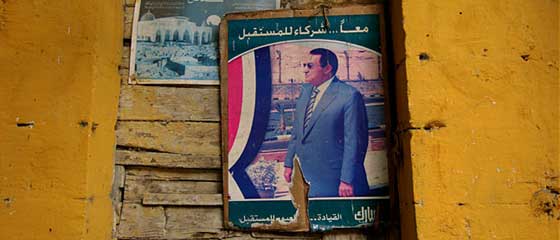
In 2008 president Hosney Mubarak extended the state of emergency for a further two years. This massive police presence is less about protecting the country from invasion, and more about protecting the president from his political enemies and tourists from radical extremism.
As a foreigner you will only be slightly effected by this in the following ways:
You will need to keep your passport handy at all times ready to present it upon demand.
You will need to be careful that no police/military are accidentally or deliberately in your photos. This can be equated to spying.
Road journey’s will likely take longer and be subject to delays. Especially in Sinai where police checkpoints are much more common.
You can expect to add hours on to any printed bus schedule which will have failed to take into account checkpoints and searches.
Travelling by road between certain destinations (e.g. Luxor and Hurghada, Aswan and Abu Simbel) is necessarily done in police convoy. Like a scene from ‘wacky races’, dozens of vehicles usually carrying tourists will race across the desert in unison to a particular destination.
This is for the safety of foreign visitors and is intended to reassure. In reality it may slow you up, restrict you to leaving at certain times of day (i.e. when police convoys leave), and terrify you as bus drivers compete to overtake one another.
If you are on an organised tour of some description you may find you have you’re very own on board police man assigned to protect you. This is more likely at times of high alert (i.e. after a recent incident in the region) or depending on the nationality of your group (some nationalities are regarded as higher risk than others).
If you’re very lucky you may even get your own police car and siren to speed you through the city.
It is important to remain friendly and courteous at all times when dealing with police. The more cooperative you are the swifter the interaction will be.
Oh and did I mention, no photos!